One-Year PG Programmes: What They Are and Who They're Right For
A faster route to a master's degree is arriving on more campuses. Here's the honest breakdown.

Postgraduate study is changing, and one of the most talked-about shifts is the arrival of one-year master's programmes on more campuses. Faster sounds appealing — but faster is not automatically better for everyone. Here is an honest, clear-eyed look so you can decide if it fits your goals.
What actually makes them different
These programmes compress a postgraduate degree into a shorter, more intensive timeline. The same rigor is delivered over less time, which means a denser schedule and a faster pace. They are often aimed at students who already hold a strong, directly relevant undergraduate background, so less time is spent revisiting foundations.
Who tends to benefit most
- Students who want to enter the workforce or further study sooner.
- Those with a solid grounding in the subject already.
- Learners who thrive under a focused, fast-moving structure and clear deadlines.
- People who value time and cost efficiency over a longer, more exploratory experience.
Who should think twice
A shorter programme is not a lighter one. If you want time to explore electives, take on substantial projects, ease into a new field, or balance study with heavy outside commitments, a longer programme may serve you far better. Speed suits some goals and rushes others.
Questions to ask before you enrol
Do your homework before committing. In particular:
- Check the eligibility criteria carefully — condensed programmes sometimes expect a specific background.
- Confirm how the degree is recognised for further study, professional bodies, and employers.
- Understand the real workload, week by week, so the pace does not surprise you.
- Ask how support, mentorship, and assessment are structured in a shorter timeline.
Weigh it against your bigger plan
The right programme length depends on where you want to be in a few years, not just on how quickly you can finish. A one-year route that gets you moving sooner can be excellent — or a two-year route that gives you depth and space can be the wiser investment. Match the format to your goal, not to the trend.
Common questions about one-year PG programmes
Is a one-year master's treated the same as a longer one?
Recognition can vary by field and institution. Confirm how a specific programme is regarded for your intended path before enrolling.
Will I have time for internships or projects?
Often less than in a longer course. If hands-on experience matters to you, ask how it is built into the schedule.
Is it cheaper overall?
Sometimes, because it is shorter — but weigh cost against what you gain and what you give up in depth and flexibility.
We post admission notices for new and restructured PG programmes here as they are announced.
Found this helpful? Share it 👇
Editorial Desk
The KSA Education newsroom tracks every exam notice, scholarship window and admission update that matters to students — and explains what to do next, in plain language.
Related articles
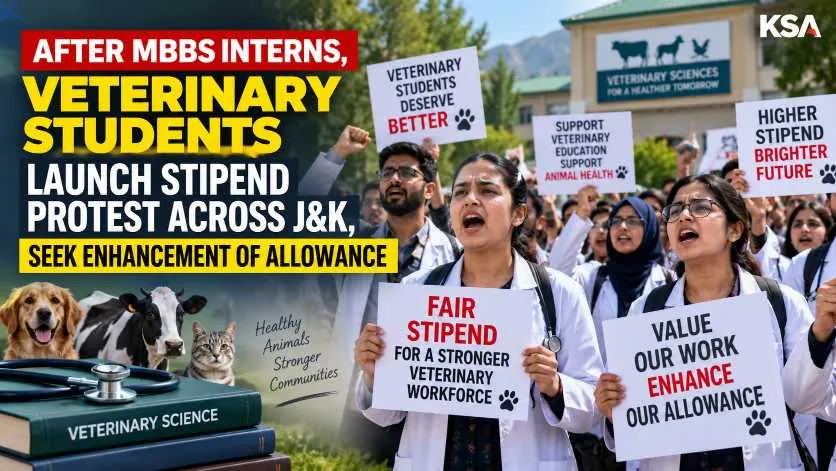
After MBBS interns. Veterinary students launch stipend protest across J&K, seek enhancement of allowance
After MBBS interns. Veterinary students launch stipend protest across J&K, seek enhancement of allowance
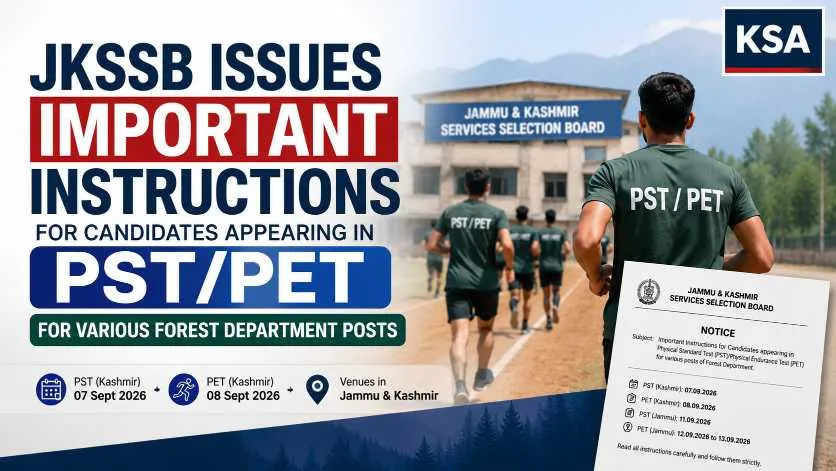
JKSSB Issues Important Instructions for Candidates Appearing in PST/PET for Forest Department Posts
JKSSB Issues Important Instructions for Candidates Appearing in PST/PET for Forest Department Posts
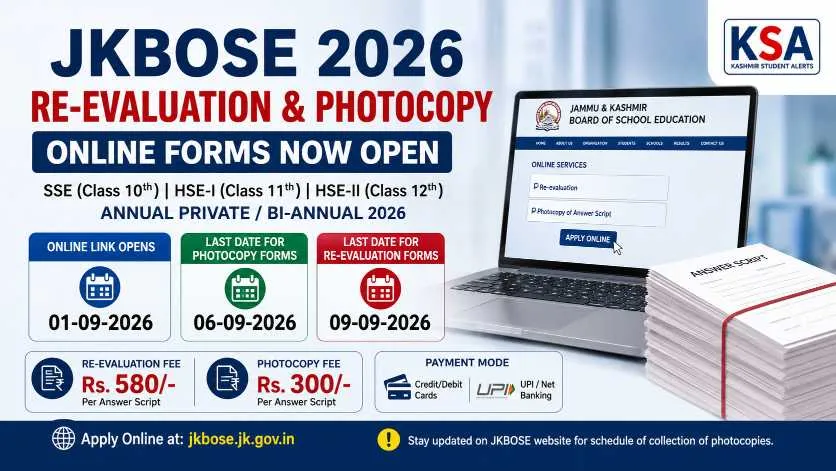
JKBOSE Re-Evaluation 2026: Online Forms Open for Class 10th, 11th & 12th; Check Dates and Fees
JKBOSE Re-Evaluation 2026: Online Forms Open for Class 10th, 11th & 12th; Check Dates and Fees
JKBOPEE Provisional Selection List 2026 Released for B.Sc Nursing & Paramedical Courses; Check Admission Dates
J&K BOPEE Provisional Selection List 2026 Released for BSc Nursing, Paramedical & Technology Courses; Check Admission Dates and Guidelines